X
City government should make life easier. For too many people in Ward 3, it doesn’t.
I'm running to change that.

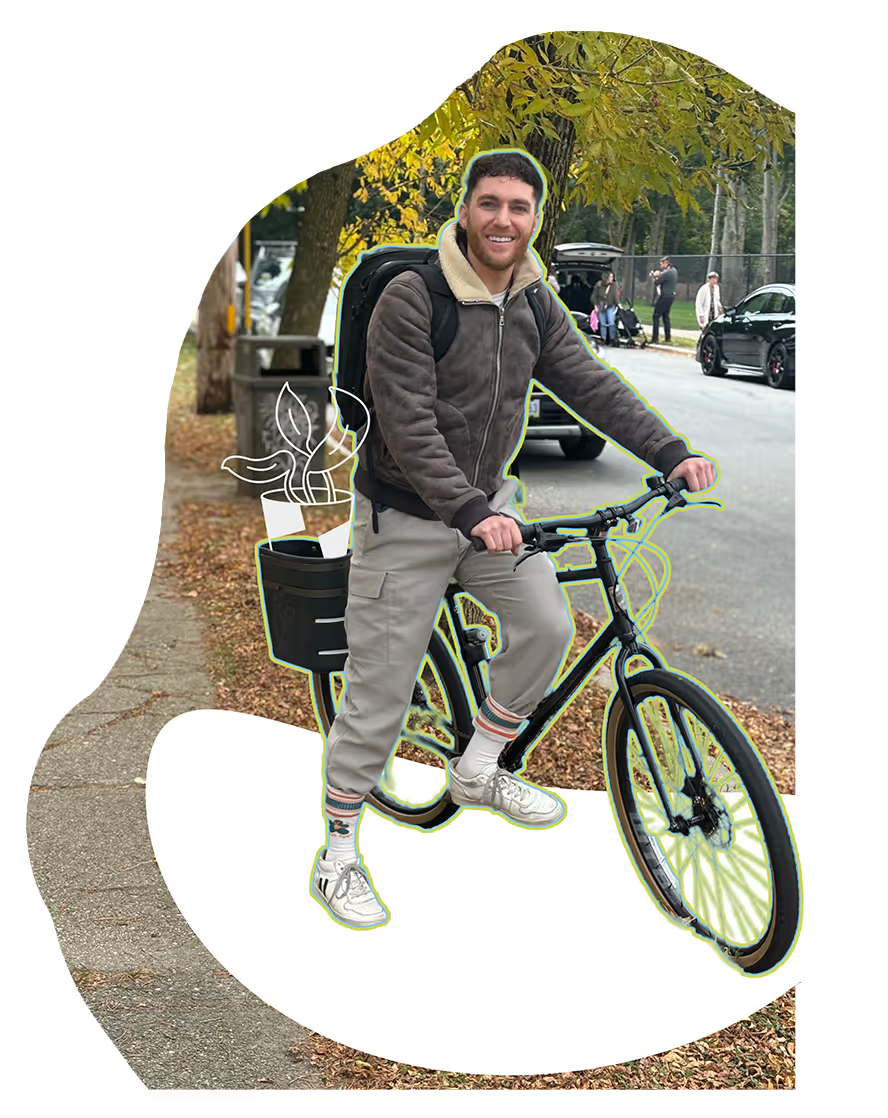



I’m Jason Kashdan and I’m running for Providence’s Ward 3 City Council seat because I understand that our health and quality of life are shaped by the conditions where we live: from housing costs and transportation to neighborhood safety and access to nourishing food. The truth is, we have the tools to build a Providence that works better for everyone.
When I was diagnosed with Crohn's disease, I was able to step back from my first career in journalism and figure out how to heal. Years writing stories and listening to people’s struggles taught me how institutions work and how to hold them accountable to the people they're meant to serve. I'll bring those same skills to City Hall.
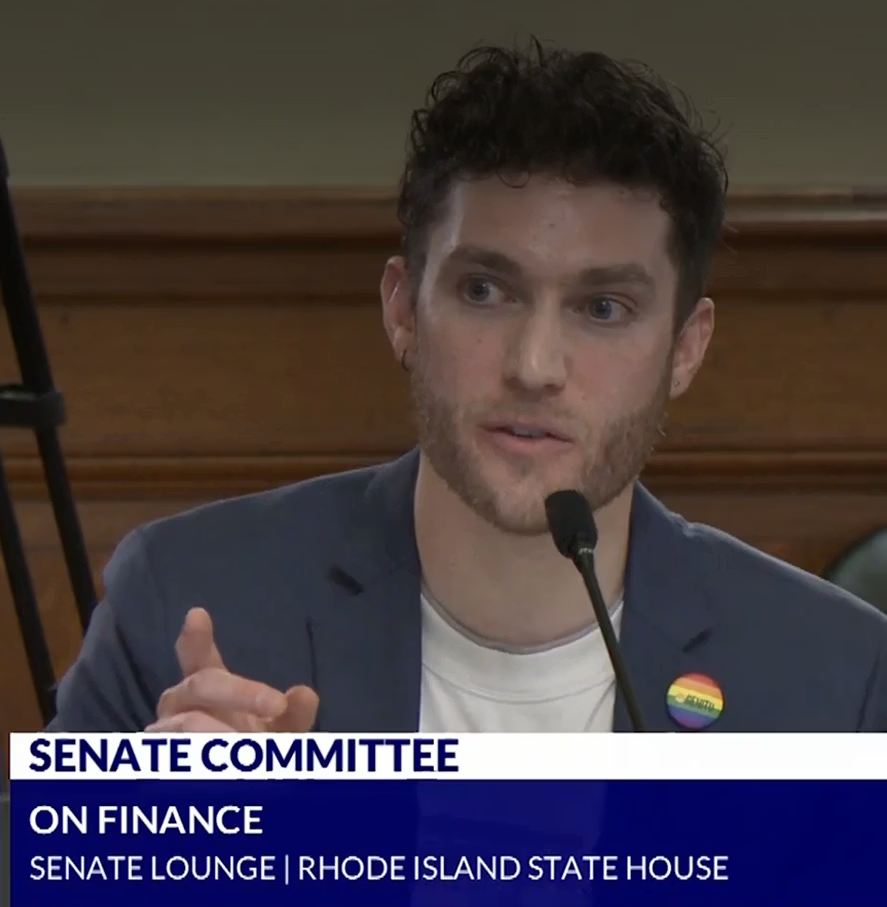
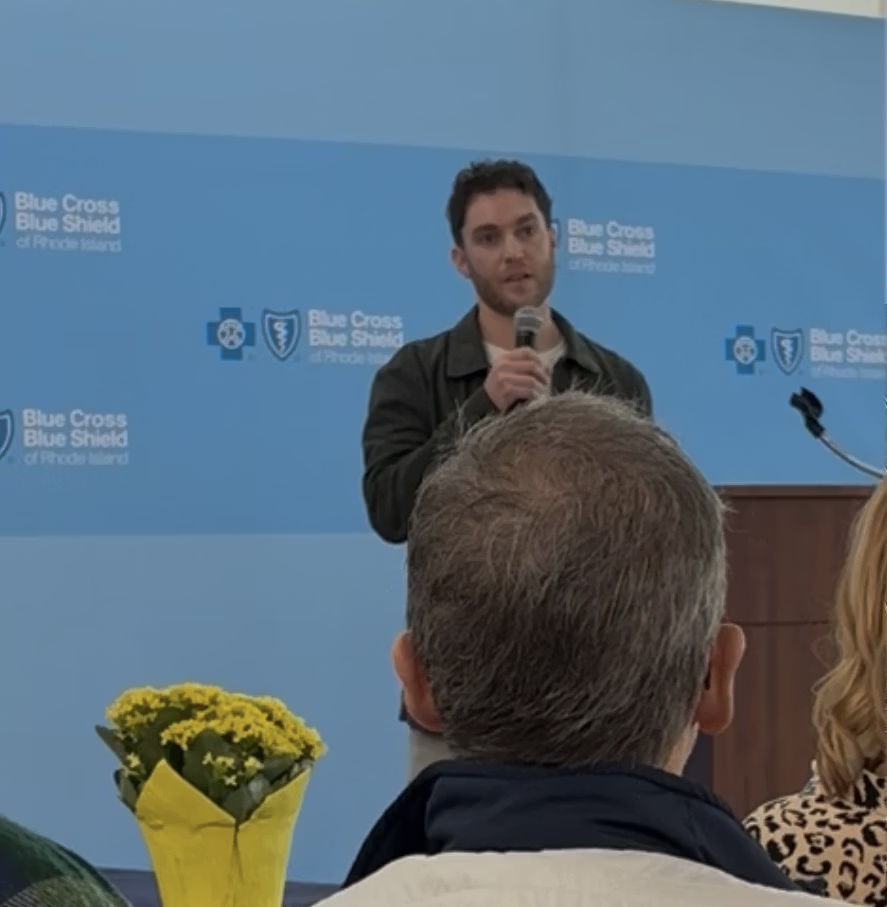
What differentiates me from the other Ward 3 candidates is that I’m already doing the work. I’ve coordinated with Constituent Services to fix downed powerlines and cleanup sidewalks. I’ve hosted neighborhood feedback sessions and volunteered as a bilingual community liaison for the MLK Elementary School rebuild project. I’ve spoken up at City Hall and the State House on issues like climate resilience, road and sidewalk safety, and food and nutrition security. As your councilperson, I’ll continue building those connections through accessible, responsive leadership and meaningful community engagement.



Good representation starts with listening, so I'll improve how we invite input. I'll host monthly one-on-one office hours, support English-Spanish interpretation at community meetings, and open a public request tracker tied to PVD 311. I won't let your feedback fall into the bureaucratic weeds.



Ward 3 is full of neighbors who already look out for each other and I'll provide resources to support them. We'll build a central messaging board on Hope Street, create a digital community channel to share skills and tools, and ensure consistent funding for our block parties and community gardens.


Together, we'll ensure our community will be stronger four years from now. We'll create a Ward 3 Youth Council, bring consistent homework help to Rochambeau Library, and support our neighborhood Associations to publish clear mission statements and four-year plans.









The sad reality is that too many folks drive faster than the posted limit. A super-speeder crash at Dean and Broadway, steps from my nutrition practice, struck a pedestrian during a police pursuit. And despite the fatalities on North Main around Providence, we’re still waiting for robust, common-sense action.
Let's take a cue from behavior change science that directly ties to street safety: Our environment shapes our behavior. Our streets won’t become safer by hoping every driver makes the right choice, even with traffic cameras and speed bumps. But we can change what the street physically asks of the driver with traffic calming measures like narrower roads, protected bike lanes and better pedestrian signal timing. At 50 mph a person hit by a car has a 75% chance of dying, at 20 mph it's under 10%.
I've worked alongside our city’s planners and the Providence Streets Coalition on the Safe Streets For All Grant. As part of our push for life-saving changes across our city, I’d like to have an actionable plan for a safe parking intervention in my first year. Like dozens of cities around the country, we can paint the 20 feet from the curb no-parking zone red. It’s a simple, tried-and-true tool to improve driving visibility. Nudges like this should be part of an environment-driven behavior change strategy.
We have to stay true to the language in our Vision Zero policy to eliminate all traffic fatalities and injuries across Providence, and in the tragically dangerous corridors in our own neighborhood.
Our city has made it so that neighbors are spending too much on housing costs. More than half of Ward 3 households spend over one-third of their budget on rent. The families who made Ward 3 what it is are being priced out and that displacement affects everyone, from schools to small businesses. The pattern is older than any councilor sitting today, and so is the duty to interrupt it.
The blocks where families are being priced out today are the same ones the Providence Redevelopment Agency cleared in the late 1950s. Baseless police raids and deliberate disinvestment enabled city officials to designate these neighborhoods as “slums.” They demolished 650 homes on Lippitt Hill. The original plan literally says, “No community facilities, recreation areas, or public buildings… shall be retained.” This included churches, synagogues and an elementary school. Now, instead of a vibrant community, we have a suburban shopping plaza and a massive surface parking lot.
The good news is we already have policies on the table. I testified in favor of the Providence Rent Stabilization Ordinance and recommended improvements to strengthen it, including specifying how capital-repair pass-throughs for health and safety will be structured and funded. We can also improve zoning and do away with parking minimums for new development. If developers didn’t have to build so much parking, they could build more housing. At a minimum, every city-adjacent project should require an anti-displacement review so we can work toward healing the damage caused by leadership in the past.
Did you know the Providence Public Schools are in the middle of a multi-year rebuild process? The decisions being made right now, about building design, lunch programs, community engagement, and school-neighborhood ties, will shape the next generation of Ward 3 kids. The question is who gets to decide what "rebuilt" means.
I've met with PPSD operations, RIDE, and construction management. The difference between genuine community input and tokenized input is whether parents and educators get a seat at the table or in an auditorium for a retrospective presentation.
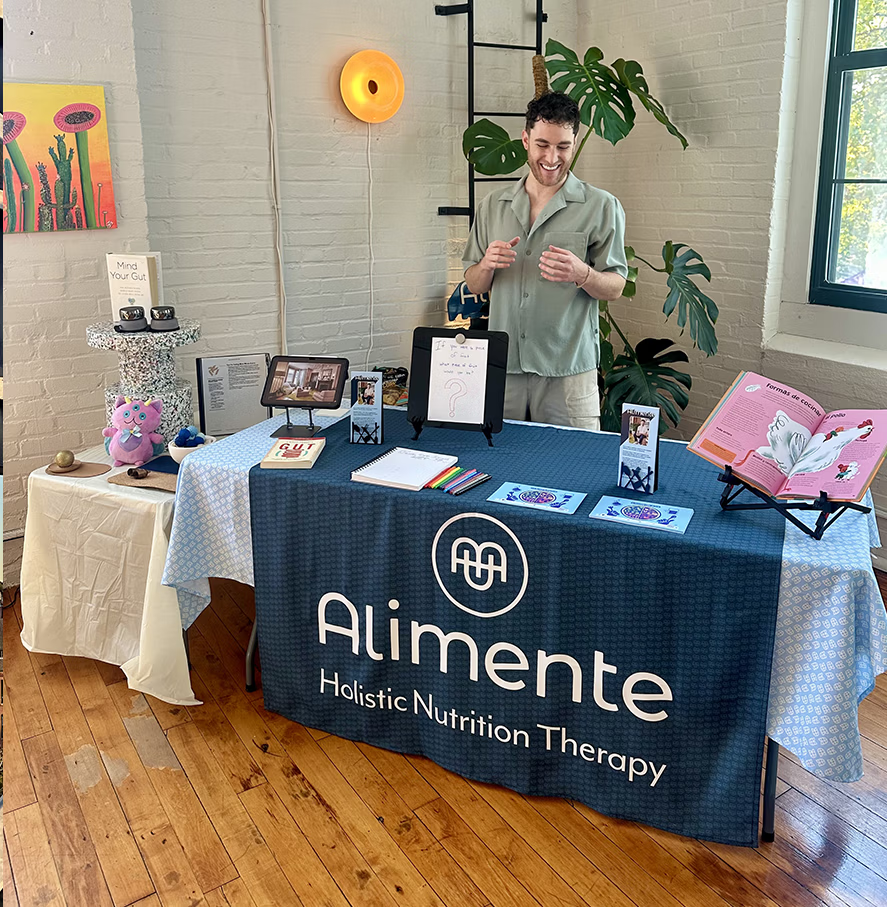
As a registered dietitian, healthy school meals is where I've worked most directly. I authored a paper detailing how we could fund a holistic free breakfast and lunch program for kids across Rhode Island. The evidence is straightforward: universal free meals at school lower obesity, lower suspensions, and improve learning. Once again, the environment dictates behavior.
We have proof across New England that it’s possible to build great schools within budget. PPSD can use “Breakfast after the Bell” to serve breakfast in the classroom during attendance and announcements so no kid misses a meal when the bus runs late. We can adjust lunch waves so a 6-year-old isn't eating at 10:30am and going hungry until they get home.
We can help our school leadership champion these changes to make our community schools more appealing. No elementary school kid who lives blocks away from MLK should have to get on a bus for a school across town. The Rebuild PPSD project gives Ward 3 families a once-in-a-lifetime chance to get it right. That's why I've stepped up early in the planning process to lend my expertise and help create strong community schools.
The bus should come every 20 minutes. Sometimes it leaves early, leaving you in the dust. Sometimes it doesn’t come at all. After years of testifying at the State House for RIPTA funding, we're still arguing about whether reliable transit is a basic public service in Providence.
Reliable transit is normal infrastructure in American cities in 2026. In Ward 3, more than a third of Hope households and almost half of Mount Hope households don't own a car. For those neighbors that is their only option to get to work, a doctor’s appointment, and the grocery store. Dependable public transit benefits drivers too. More buses on the road means fewer cars stuck in traffic or circling the block looking for parking.
The good news is, we already know how to build it. The East-West Transit Corridor has the bus bumpouts, curb extensions, and dedicated lanes that make reliable service real. At a minimum, the stops in Ward 3 should have shelters and seating. I've provided testimony for RIPTA funding on bills, and the legislature still treats transit as a discretionary line item. The cuts land hardest on Ward 3 households who can't drive around the problem. We have to hold Providence accountable for spreading transit investment beyond a single downtown corridor.
Behind a maintenance shed in the North Burial Ground, gray tree frogs and Fowler's toads breed in a shallow pool that catches runoff from three roads. The Friends of the Moshassuck organization partners with the city to keep an eye on it. Debris from upstream is filling the pool faster than it should, and if it fills too far, the tadpoles won't survive.
The system failing the frogs is the same system failing us. Sixty percent of Providence's sewer pipes are more than 100 years old, and the city has had 13 significant flooding events in three years.
Gratefully, our Ward 3 Councilor Sue Anderbois has been leading the charge to improve Providence's climate resilience strategy. Alongside Ward 2 Councilor Jill Davidson, she introduced a measure to fix how Providence pays for stormwater and sewer upkeep. We can charge property owners based on how much hard surface they have. That means tax-exempt institutions like universities and hospitals would finally pay their share. We have to make sure the fix includes income-based affordability for residential ratepayers, so the cost doesn't land on the households least able to absorb it.
Providence also needs a city-wide composting program… yesterday. Our Central Landfill is filling up, and sending food scraps that produce methane in landfills isn’t helping. State Senate Bill 2441 would create a Compost Fund to kickstart composting in Providence and the RI School Recycling Project is ready to anchor the school side.
Every one of these investments needs an equity scorecard, so the people already hardest-hit by climate change aren't the ones disproportionately paying for the fix. Climate resilience means protecting the people already being harmed while we build toward a cleaner future.
Dr. Clarissa Pinkola Estés



Select your personal priorities below. Fill out the form and click submit.